Judaism – History, Beliefs, Scriptures and Key Traditions
Published on: 27-Feb-2026Judaism is the oldest of the monotheistic religions. It has been the spiritual teacher of the Western world in a very real sense directly and as well as through the medium of Christianity, indirectly. Judaism is also a religion associated with a particular people who have always been relatively few. The Jewish population of the world in the middle of the twentieth century is estimated to be under eleven and one half million, approximately five million less than before Hitler. This religion holds the belief in a universal God. The basic statement of the Jewish religion is found in Deuteronomy:
٤ اِسْمَعْ يَا إِسْرَائِيلُ: ٱلرَّبُّ إِلَهُنَا رَبٌّ وَاحِدٌ. 1
"Israel, remember this! The Lord --- and the Lord alone is our God".
Nevertheless, Judaism as a religion is more than monotheism. It is ethical monotheism, one of its great contributions to the world being its emphasis upon personal and social righteousness. 2 There is in Judaism what has been called an "ethical dimension," which is worthy of closest study. Judaism and Christianity both represent a fantastic blending of religion with ethics which ever since the time of the Hebrew prophets and Jesus  has made it always impossible to detach the moral from the religious demands of life. 3
Judaism is believed by religious Jews to be the expression of the covenantal relationship that God established by the Children of Israel. Today, with between 14.5 and 17.4 million followers worldwide, 4 Judaism is the tenth-largest religion in the world.
The history of Judaism spans more than 3,000 years. Judaism has its origins as a structured religion in the Middle East during the Bronze Age. 5 Judaism is considered as one of the oldest monotheistic religions. 6 The Hebrews and Israelites were already referred to as "Jews" in later books of the Tanakh, such as the Book of Esther, with the term Jews replacing the title "Children of Israel". 7
The word 'Judaism' occurs for the first time at around 100 B.C., in the Greco-Jewish literature. In the second book of the Maccabees (ii. 21, viii. 1), 'Judaism' signifies the religion of the Jews as contrasted with Hellenism, the religion of the Greeks. Judaism appears from the first as a religion transcending tribal bounds. The 'Jew,' on the other hand, was originally a Judaean, a member of the Southern Confederacy called in the Bible “Judah”, and by the Greeks and Romans “Judaea”. Soon, however, ' Jew ' came to include what had earlier been the Northern Confederacy of Israel as well, so that in the post-exilic period Jehudi or 'Jew' means an adherent of Judaism without regard to Local nationality. 8
Judaism includes a broad corpus of texts, practices, theological positions, and patterns of governance. Within Judaism, there are a diversity of movements, most of which emerged from Rabbinic Judaism, which declares that God, revealed his laws and commandments to Moses on Mount Sinai in the form of both the written and oral Torah. Historically, this assertion was challenged by various groups such as the Sadducees and Hellenistic Judaism during the Second Temple period; the Karaites and Sabbateans during the early and later medieval period; and among segments of the new non-Orthodox denominations. Modern branches of Judaism, such as Humanistic Judaism may be nontheistic. 9
Judaism's texts, traditions and values strongly influenced later Christianity. Many faces of Judaism have also immediately or indirectly influenced secular Western ethics and civic jurisprudence.
History of Judaism
Judaism is the religion of the Jews. It is the complex phenomenon of a complete way of life for the Jewish people, comprising theology, law, and many cultural traditions. 10 Jewish history begins with the covenant established between God and Abraham around 1812 BC, during the Bronze Age, in the Middle East.
Abraham is a central figure in Judaism, being considered the patriarch and the progenitor of the Jewish people. He was the first distinct historical witness, at least for his race and country, to Theism, to Monotheism, to the unity of the Lord and Ruler of all, against the ancient idolatries, the natural religion of the ancient world. 11
Abraham left the city of Ur in Mesopotamia and travelled to the land of Canaan. In fulfilment of a promise from God, he and his wife Sarah had a son, Isaac despite their advanced age. (The Bible says Abraham was 100 years old (Genesis 21: 5).). 12 Many tribes moved with their flocks among the settled cities of Mesopotamia and Phoenicia. No doubt several, from time to time, had charismatic leaders long remembered by their descendants. What made him significant is the idea of his agreement with God, by which God would help Abraham's people in return for their fulfilling God's law. This covenant can be found at the core of the story of the Hebrews.
Abraham’s grandson was Jacob , Isaac’s son, whose story provides the line of descent of the tribal division of the Hebrews. When God renewed the covenant with Jacob , he gave him a new name, Israel. Jacob eventually had twelve sons, from each of whom a tribe descends - the twelve tribes of Israel. Of the twelve children of Israel, it was to branch out into a nation. Of these sons, the four elder had been born from the prolific Leah – Reuben, Simeon, Levi, and Judah. 13
They were enslaved in Egypt, and the book of Exodus records how they were liberated under the leadership of Moses . For many years, they wandered in the wilderness, and it was during this time that God is said to have given Moses , the Torah. Then, after Moses's death, the tribes were eventually to conquer the Promised Land with God's help. These stories are all enshrined in the Scriptures, in the Word of God. 14
Beliefs and practices of Judaism
The Jewish faith is founded along the precept that there is only one indivisible, all-powerful, all-knowing and all-present God, who is fair and just and the creator of the world and man. God’s law, the Torah, as handed to Moses on the Mount Sinai reveals His character and His will for his children (as per Jewish beliefs) According to Jewish belief, God establishes a personal relationship with every one of His followers. It is the Jewish tradition to keep God’s laws and to bring holiness into every facet of their lives. They believe that they are God’s chosen people, whose responsibility is to set an example of sanctity and morality to the rest of the world.
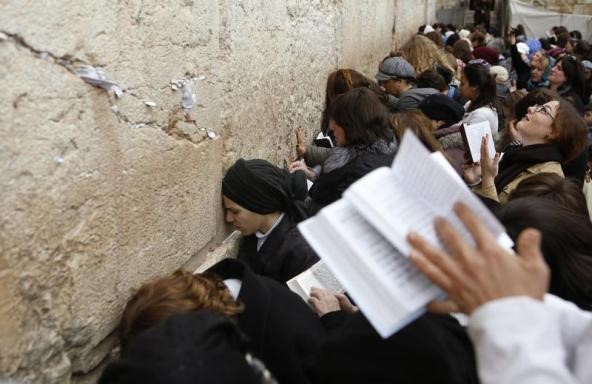
Jews consider themselves to be an inbuilt component of the worldwide community. Many of the Jewish traditions are founded round the family and family activities. Being a Jew is very much a bloody thing. Often, to be considered a Jew, a child must be born of a Jewish mother. Nevertheless, sometimes the children of Jewish fathers are also considered Jews. There is significant overlap between the ethnic and spiritual facets of the Jewish identity. Even if a Jew converts to a different religion, they are still considered Jews. Conversely, it is not easy to convert to Judaism, if not born into this cultural/religious setting.
It is frequently said that Judaism left belief free while it put conduct into fetters. Neither half of this statement is strictly true. The belief was not free altogether; the conduct was not completely controlled. In olden times the membership of the religion of Judaism was almost exclusively a question of birth and race, not of confession. Proselytes (converts) were admitted by circumcision and baptism, and nothing beyond an acceptance of the unity of God and the abjuration of idolatry is even now required by way of the profession from a proselyte. 15
The central idea of Judaism and its life purpose is the doctrine of the One Only and Holy God, whose kingdom of truth, justice and peace is to be universally established at the end of time. 16
Maimonides, in his commentary on the Mishnah, compiles what he refers to as the Shloshah-Asar Ikkarim, the Thirteen Articles of Faith, compiled from Judaism's 613 commandments found in the Torah.
The thirteen principles of faith
- I trust with complete faith that the Creator, Blessed is His Name, is the Creator and Guide of everything that has been produced; He alone has made, does make, and will make all things.
- I believe with perfect faith that the Creator, Blessed be His Name, is One, and that there is no unity in any manner like His, and that He alone is our God, who was, and is, and will be.
- I believe with perfect faith that the Creator, Blessed is His Name, has no body, and that He is free from all the properties of matter, and that there can be no (physical) comparison to Him whatsoever.
- I believe with perfect faith that the Creator, Blessed is His Name, is the first and the last.
- I believe with perfect faith that to the Creator, Blessed be His Name, and to Him alone, it is right to pray, and that it is not right to pray to any being besides Him.
- I believe with perfect faith that all the words of the prophets are true.
- I believe with perfect faith that the prophecy of Moses our teacher, peace be upon him, was true, and that he was the chief of the prophets, both those who preceded him and those who followed him.
- I believe with perfect faith that the entire Torah that is now in our possession is the same that was given to Moses , our teacher, peace be upon him.
- I believe with perfect faith that this Torah will not be exchanged and that there will never be any other Torah from the Creator, Blessed be His Name.
- I believe with perfect faith that the Creator, Blessed be His Name, knows all the deeds of human beings and all their thoughts, as the Bible states:
المصور قلوبهم جميعا ، المنتبه إلى كل أعمالهم 17.
Translation: He forms all their thoughts and knows everything they do. - I believe with perfect faith that the Creator, Blessed be His Name, rewards those who keep His commandments and punishes those that transgress them.
- I believe with perfect faith in the coming of the Messiah; and even though he may tarry, nonetheless, I wait every day for his coming.
- I believe with perfect faith that there will be a revival of the dead at the time when it shall please the Creator, Blessed be His name, and His mention shall be exalted for ever and ever. 18
In Maimonides' time, his list of tenets was criticised by Hasdai Crescas and Joseph Albo. Albo and the Raavad argued that the Maimonides' principles contained too many items that, while true, were not fundamentals of the faith.
Including these core beliefs, there is no uniformity of opinion among Jews. The strict Orthodox are the most visible. The men wear a uniform of black hat and black jacket; the women are modestly dressed and often either wear a wig or cover their hair with a scarf. Their lives are entirely ruled by the demands of Jewish law; they tend to have big families, and they live near their particular synagogue (place of worship) because they do not use any mechanised form of transport on the Sabbath day.
The modern Orthodox (whose spiritual leader in the United Kingdom is the Chief Rabbi) are less obvious in their appearance, although the men wear small skull caps to cover their heads. They too regard Jewish law as authoritative, only they may be somewhat more liberal in their version of it in their daily life.
Then there are the non-Orthodox groups. They have accepted the findings of modern biblical scholarship and acknowledge that the Scriptures are documents written by a succession of human beings. This is not to state that the Scriptures are not divinely inspired, but they acknowledge the possibility of human error and cultural relativism
Many Jews have no synagogue affiliation. They are Jewish because their families are Jewish. They may observe little, or no Jewish law and their knowledge and loyalty to the whole system may be very slight. 19
In short, David Philipson 20 draws the outlines of the reform movement in Judaism by opposing it to the strict and traditional rabbinical approach and thus comes to the conclusions similar to that of the Conservative movement. 21
Ten commandments of Judaism
The Ten Commandments, also known as Aseret HaDibrot (“Ten Sayings” in Hebrew) or Decalogue, are the first ten of the 613 commandments given by God to the Jewish people. They form the foundation of Jewish moral philosophy, as well as civil and religious law. According to R. W. Dale, these commandments recall the better faith of earlier times. It is not God’s highest purpose to preserve the orderliness of the material universe, to cater for the physical wants of His creatures, for their comfort, safety, and felicity. It belongs to Him to assert and vindicate the universal authority of the eternal law of righteousness. He has therefore given laws which it is the supreme obligation of all His moral creatures to obey.
These laws are not arbitrary, but about us, they are absolute. Righteousness is not right because He commands it, but everything that He commands is right. Wickedness is not sinful because he prevents it; but everything that He forbids is sinful. Whatever sanctity, whatever majesty, belongs to the eternal law of righteousness, belongs to Him. Of that law, His will is the perfect reflection. 22
These commandments are mentioned twice in the Torah—once in Exodus and again in Deuteronomy. They are as follows:
- I am the Lord your God, who took you out of the country of Egypt, where you were slaves.
- Worship no God but Me.
- Do not make yourself images of anything in heaven or earth or the water under the earth. Do not bow down to any idol or worship it, because I am the Lord your God and I tolerate no rivals. I bring punishment on those who hate Me and on their descendants down to the third and fourth generation. But I show My love to the thousands of generations of those who love Me and obey My laws.
- Do not utilize My name for evil intents, for I, the Lord your God, will punish anyone who misuses My name.
- Observe the Sabbath day by keeping it holy. You have six days in which to do your work, but the seventh day is a day of rest dedicated to me, On that day no one is to work neither you, your children, your slaves, your animals, nor the foreigners who live in your country. In six days I, the Lord made the earth, the sky, the seas, and everything in them, but on the seventh day I rested, that is why I, the Lord blessed the Sabbath day and may it holy.
- Respect your father and your mother, so that you may live a long time in the land that I am giving you.
- Do not commit murder or torture.
- Do not commit adultery.
- Do not steal.
- Do not accuse anyone falsely. 2324
These commandments are the leading rules that refer to general situations, without getting into detail: murder, stealing, adultery, false witness in the courtroom. The fine points — such as what constitutes murder? Is killing in wartime murder? What about killing a fetus to save the mother? — are worked out in other books of the Torah and later in the Mishna and the Talmud.
Jewish Holy Scripts
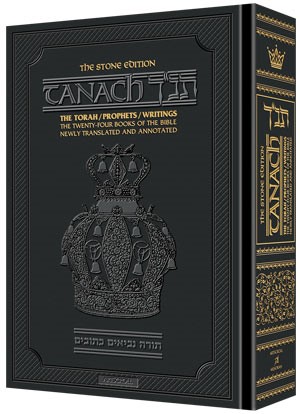
Old Testament
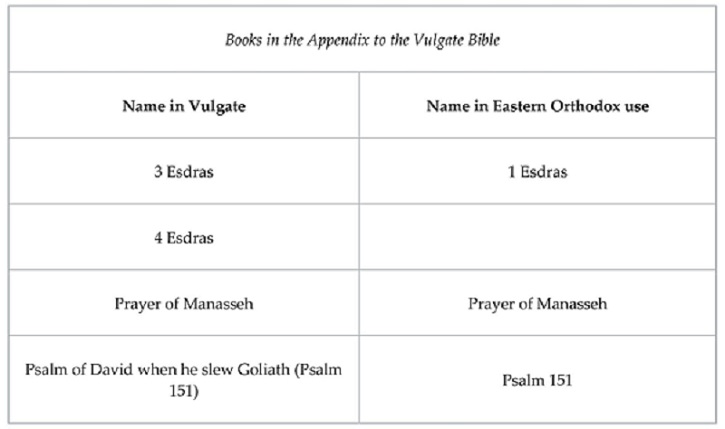
The Hebrew, Semitic people, were settled in Judea long before 1000 B.C, and their capital city after that time was Jerusalem. Their history is interwoven with that of the great empire on either side of them, Egypt to the southward and the changing empires of Syria, Assyria, and Babylon to the northward. Their importance in the world is because they got a written literature, a world history, a assemblage of laws, Chronicles, Psalms, books of wisdom, poetry and fiction and political utterances which became what the Christians know as the Old Testament, the Hebrew Bible. It is the counterpart to the New Testament, the second part of the Christian Bible. The Old Testament canon varies between Christian Churches. Protestants have a version with 39 volumes. Catholics possess a version with 46 books, and Eastern Orthodox and Oriental Orthodox Churches take the Old Testament version with 49 volumes. 25
The Old Testament consists of many distinct books by several writers over a period of centuries. It is not entirely clear at what point the parameters of the Hebrew Bible, the foundation for the Christian Old Testament, were set. Some scholars have opined that the canon of the Hebrew Bible was established already by about the 3rd century BC, with others suggesting later dates. Christians traditionally divide the Old Testament into four sections:
- The first five books or Pentateuch (Torah);
- The history books telling the story of the Israelites, from their conquering of Canaan to their defeat and exile in Babylon;
- The poetic and "Wisdom" books dealing, in various forms, with the questions of good and evil in the world;
- Moreover, the books of the biblical prophets, warning of the consequences of turning away from God.
The disputed books, included in one canon, but not in others, are often called the Biblical Apocrypha, a term that is sometimes applied specifically to distinguish the books in the Catholic and Orthodox canons that are missing from the Jewish Masoretic Text and most modern Protestant Bibles. Catholics, following the Canon of Trent (1546), describe these books as deuterocanonical, while Greek Orthodox Christians, following the Synod of Jerusalem (1672), use the traditional name of anagignoskomena, meaning "that which is to be read." They are present in a few old Protestant versions; the German Luther Bible included such books, as did the English 1611 King James Version. The foundational Thirty-Nine Articles of Anglicanism, in Article VI, asserts these disputed books are not used "to establish any doctrine," but "read for example of life." Although the Biblical Apocrypha are still used in Anglican Liturgy,26 the modern trend is to not even print the Old Testament Apocrypha in editions of Anglican-used Bibles.
Note: Empty table cells indicate that a book is missing from that canon.
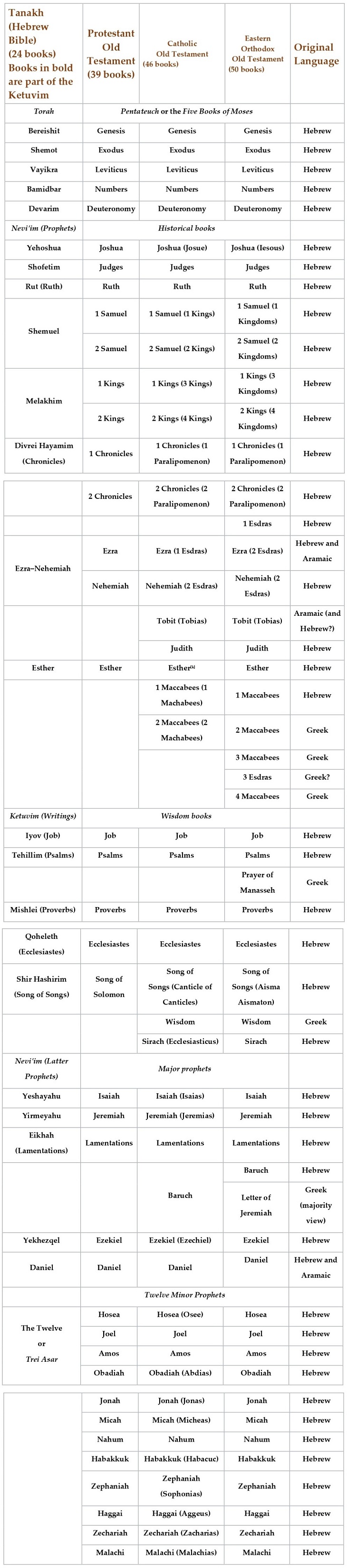
Several of the books in the Eastern Orthodox canon are also found in the appendix to the Latin Vulgate, formerly the official Bible of the Roman Catholic Church. 27
Talmud
The Talmud is a record of rabbinical discussions about Jewish law, biblical interpretation, ethics, customs, and history. It is the foundation for all codes of rabbinical law and is much quoted in other Jewish literature. 28 Its compilation started in the 5th century when times were so uncertain in Babylonia as well as in Judea that the Jews felt it necessary now to collect and write down their various traditions and laws. They could no longer believe the transmission by word of mouth, they could no longer rely on their memories, wonderful though they were, and though further aided by a mnemonic grouping of the Halachas (Jewish Law). So, they were reluctantly compelled to overcome their sentimental objection to write down these traditions which from the very title, Oral Law, implied that they should be transmitted from mouth to mouth, inscribed only on the tablets of the mind. Maybe, likewise, they felt that writing would crystallise the Halachath (Jewish Law) at the spot where they were transcribed into unchangeable dicta and prevent their further growth. For a while unwritten, they were fluid and could be modified from age to age. As a matter of fact, the writing down of the laws did tend to enlighten them, and thus hampered the progressive development of Jewish Law. Rabbana Ashi commenced the work of codifying and writing down the Oral Law about the year 400 BC. 29
There are two versions of the Talmud—the Babylonian Talmud and the Jerusalem Talmud—each containing the same Mishnah but a different Gemara. Of these, the Babylonian Talmud is larger, better edited, and more influential.
Siddur and Jewish Liturgy
Prayers
Recitation of prayers is a substantial component of Jewish worship. These prayers, often with instructions and commentary, are found in the Siddur – the traditional Jewish prayer book. Observant Jews are required to recite three prayers daily and more on the Sabbath and Jewish holidays. While solitary prayer is valid, attending synagogue to pray with a minyan (quorum of ten adult males for traditional Jews, ten adults for others) is considered ideal and is vital for some prayers to be said. In recent times a more ad hoc attitude to prayer has often been taken among Jews, most of whom today would not recognize a prayer if it hit them on the head. So, we should not overemphasise the significance of prayer for the Jewish world as a whole. On the other hand, for many Jews, prayer is a significant part of their day, and it is important to know how this operates and what sorts of prayers occur regularly as part of various services.
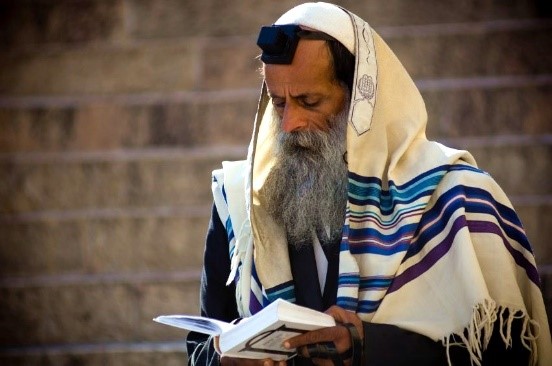
In most synagogues or temples, men wear a head covering, usually a dress, hat or yarmulke (kippah), but most Reform (or Progressive) temples do not require people to cover their heads (neither Jew nor Gentile). Nonetheless, many Reform Jews now choose to wear a kippah. Parts of the services are recited standing, and the name of one prayer, the Amidah, actually means ‘standing’. Bowing is done at certain points in the service. A Tallit (prayer shawl) is worn during the morning and all day on Yom Kippur. Appropriate attire for a house of worship is expected in traditional synagogues. Both men and women are supposed to adhere to tzniut (rules of modesty) – long sleeves, long skirts and covering of the hair (married Jewish women only) for women, and men would be expected to wear trousers and cover their arms. In less traditional synagogues, a mixture of modes of attire are acceptable. In affluent communities, synagogues and temples are frequently criticized for being fashion parades. 30
Jewish holidays
Jewish holidays are special days in the Jewish calendar, which celebrate moments in Jewish history, as well as central themes in the relationship between God and the world, such as creation, revelation, and redemption.
The Sabbath
Jews gave the idea of a regular, weekly day off to the world. Previously in ancient times, there were irregular holidays throughout the year. The Jewish Sabbath is the seventh day of the week, Saturday. It begins on Friday evening at sunset, and it ends a little more than 24 hours later on Saturday evening when it is dark. 31 It is observed at home and the Synagogue. Although Jews are expected to attend it at the Synagogue, (to strengthen their Jewish consciousness), still there are occasions when these ceremonies are conducted at home.
About the Sabbath ceremony at the Synagogue, William Rosenau states:
he Jewish Sabbath and holy days do not begin at midnight, but with sundown of the day preceding, and end with the following sundown. This custom is based on the often-recurring phrase in the Biblical creation story, “It was evening, and it was morning” (the evening always preceding the morning in the mention of the day. In many synagogues, the Sabbath is not welcomed in any other way than by special hymns and songs, but into a significant number of them a ceremony called the “Kiddush”, a feature of the Sabbath sanctification in the Jewish home has found its way. The Kiddush consists of the lifting up of a cup of wine by the precentor at the close of the evening devotions. In doing this, he praises God the Creator of the universe (who is reported to have rested on the seventh day) as Creator of the fruit of the wine and, and for having ordained the Sabbath.” 32
Pilgrimage festivals
To perform a vow, or for the sake of getting some sort of divine approval, all the Israelite males visited the synagogues. The Bible mentions it as:
١٦ ثَلَاثَ مَرَّاتٍ فِي ٱلسَّنَةِ يَحْضُرُ جَمِيعُ ذُكُورِكَ أَمَامَ ٱلرَّبِّ إِلَهِكَ فِي ٱلْمَكَانِ ٱلَّذِي يَخْتَارُهُ، فِي عِيدِ ٱلْفَطِيرِ وَعِيدِ ٱلْأَسَابِيعِ وَعِيدِ ٱلْمَظَالِّ. وَلَا يَحْضُرُوا أَمَامَ ٱلرَّبِّ فَارِغِينَ. 33
“All the men of your nation are to come to worship the Lord three times a year at the one place of worship: at Passover, Harvest Festival, and the Festival of Shelters. Each man is to bring a gift.”
These three festivals, when male Jews are told to go to a designated place, are the Passover, Shabu’ot and Sukkot. 34 These three festivals were original, as has been said, nature feasts. However, later on, they became the pilgrim feasts.
Passover
As noted in Exodus:
٧ فَطِيرٌ يُؤْكَلُ ٱلسَّبْعَةَ ٱلْأَيَّامِ، وَلَا يُرَى عِنْدَكَ مُخْتَمِرٌ، وَلَا يُرَى عِنْدَكَ خَمِيرٌ فِي جَمِيعِ تُخُومِكَ. 35
“For seven days you must not eat any bread made with yeast or leavened bread anywhere in your land”
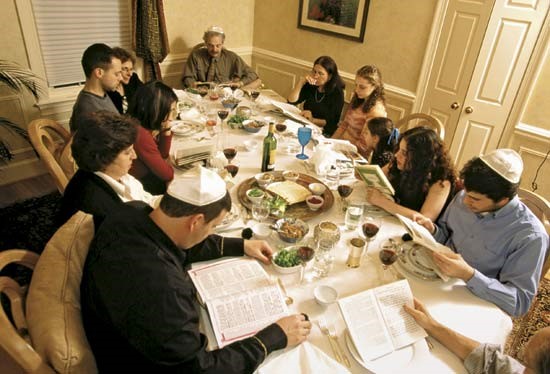
The inaugural festival, comprising two days of rest, is the Passover. It celebrates the deliverance of the Israelites from Egyptian Bondage. The Passover practically celebrates the establishment of the Jewish People. It is also the festival of liberty. 36 This is the festival when Jews are commanded not to eat any leavened bread. Now broadened to include a range of other products, and all leavening and the utensils and dishes used with it are removed from the house by the evening of 14 Nisan (April), and the bread is ceremonially burnt the next morning, while the utensils are sold to a Gentile, for the week. The first night, and outside of Israel the second also, there is a service which now takes place in the home, the Seder, which is the carrying out of the commandment of relating the story of the exodus to children, strictly speaking, sons, and what God did to make this possible. 37
Shavuot (Pentecost)
As mentioned in Exodus:
وتصنع لنفسك عيد الاسابيع ابكار حصاد الحنطة. وعيد الجمع في آخر السنة. 38
“Keep the harvest festival when you begin to harvest the first crop of your wheat, and retain the festival of shelters in the autumn when you gather the fruit.”
The second of the three festivals is Pentecost or the feast of weeks. In the Pentateuch, it is exclusively a nature festival. It was the celebration of the first fruits. The Rabbis associated this festival with the giving of the Ten Words and the revelation at Sinai. They supposed that this great event took place fifty days after the Passover. 39
Sukkot
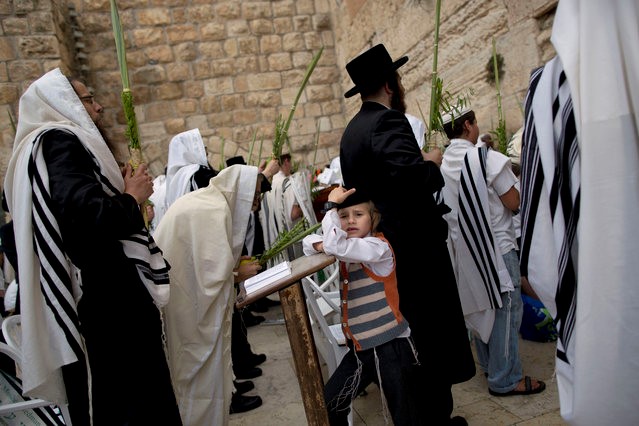
It is likewise called ‘Feast of Tabernacles’ or ‘Feast of Booths’. It is a Jewish autumn festival of double thanksgiving that begins on the 15th day of Tishri (in September or October), five days after Yom Kippur, the Day of Atonement. It is one of the three Pilgrim Festivals of the Hebrew Bible. The festival is characterised by the erection of huts made of branches and by the gathering of four species of plants, with prayers of thanksgiving to God for the fruitfulness of the land. As part of the celebration, a sevenfold circuit of the synagogue is made with the four plants on the seventh day of the festival, called by the special name Hoshana Rabba (“Great Hosanna”). The eighth day is considered by some a separate festival and called Shemini Atzeret (“Eighth Day of the Solemn Assembly”). In Israel, the eighth day also commemorates the completion of the annual cycle of readings from the Torah (the first five books of the Bible) and is called Simḥat Torah (“Rejoicing of the Law”). 40
Holy Days
The High Holidays (Yamim Noraim or "Days of Awe") revolve around judgment and forgiveness.
1. Rosh Hashanah
The New Year is the first day of the seventh month (Tishri) when the ecclesiastical year began. In the Bible, the festival is exclusively recognised as a 'day of blowing the shofar' (ram's horn). 41 As an omen of good luck for the New-Year, Abaye said one should eat on Rosh ha-Shanah pumpkins, fenugreeks, leeks, beets, and dates because they all grow quickly and because it is declared, their names in Aramaic meaning "plentiful" or "forgiveness." In modern times the table is served with grapes, other fruits, and honey. After the benediction of "Ha-Moẓeh", the bread is dipped in the honey when the following benediction is recited: "May it please the Lord our God and God of our fathers to renew for us a good and sweet year." The feasting is in anticipation that the prayers will be acceptable, and in reliance on the goodness of God. 42
2. Yom Kippur
The Day of Atonement was the most significant one. It is celebrated on the tenth day of the seventh month once a year, constituting as it made an annual atonement for all the sins of the people, made for a special day of fasting and afflictions of the soul. 43
This great holy day in the Jewish calendar occurs on the tenth of the month of Tishri. It is both a fast and a feast, since it recalls not only Israel’s sins, but also celebrates the mercy of God in providing for their pardon. The day is likewise known as ‘Yom-Kippur’ and ‘white fast’. The great white fast lasts from sunset on the ninth of Tishri until the appearance of the first three stars on the evening of the tenth. The synagogues are open all night for worship, while during the day the edifices are crowded with penitents, the men and boys, who do not leave from the beginning until the end.
The daytime is about abstinence not only from all the food, but from drink, wearing of shoes, washing and all varieties of labour, the only exception being for the priests who always wash their hands before passing on the grace. This great day –half feast and a half fast comes to a glorious end with the blowing of a threefold blast on the ram’s horn, after the neila (door closing i.e., the service closing of the day) service, on the evening of the feast. 44
3. Purim
The month of Adar (February/March) is depicted as the happiest month of the year because of its 14th, there falls the joyful celebration of Purim. This is the month that is repeated in intercalated years, and when this happens, Purim falls in the second Adar, so that it is always a month before Passover. It is a small festival, but its composition is a major one for Jews: deliverance from persecution. Tradition lays down various observances, such as a fast on a preceding day and a feast on the day itself, charitable gifts, and taking food to friends or neighbors. However, the most striking features of the home celebration are the license, indeed encouragement, to drink to the point of oblivion, and a riotous carnival atmosphere, with the wearing of masks and fancy dress (even cross-dressing, forbidden in the Torah, is tolerated). Children act out the story of Queen Esther, and three-cornered pastries filled with poppy seeds, known as ‘Haman’s ears’ or ‘Haman’s pockets’, are traditionally eaten. 45
4. Yom Ha-shoah
The new holidays of Yom Ha-Shoah (Holocaust Remembrance Day) and Yom Ha'atzmaut (Israeli Independence Day) commemorate the horrors of the Holocaust and the achievement of Israel independence, respectively.
Jewish Calendar
Numbering of Jewish years
The year number on the Jewish calendar represents the number of years since the creation. It is calculated by adding up the ages of people in the Bible back to the time of creation. Nevertheless, this does not imply that the world has existed for only 5700 years as it is understood. Many Orthodox Jews will readily acknowledge that the first six "days" of creation are not of 24-hour days (because, a 24-hour day would be meaningless until the creation of the sun on the fourth "day"). Some Jewish scholars, who use the articles of nuclear physicists also show how Einstein's Theory of Relativity sheds light on the correspondence between the Torah's age of the universe and the age ascertained by science but their arguments are not strong enough to support their viewpoint in general.
Jews do not use the words "A.D." and "B.C." to refer to the years on the civil calendar. "A.D." means "the year of our Lord," 46 instead, they use the abbreviations C.E. (Common or Christian Era) and B.C.E. (Before the Common Era), which are commonly used by scholars today.
Months of the Jewish Year
The "first month" of the Jewish calendar is the month of Nissan, in the spring, when Passover occurs. However, the Jewish New Year is in Tishri, the seventh month, and that is when the year number is increased. 47 The names of the months of the Jewish calendar were adopted during the time of Ezra , after the return from the Babylonian exile. The names are Babylonian month names, brought back to Israel by the returning exiles. Note that most of the Bible refers to months by number, not by name.
The Jewish calendar has the following months:
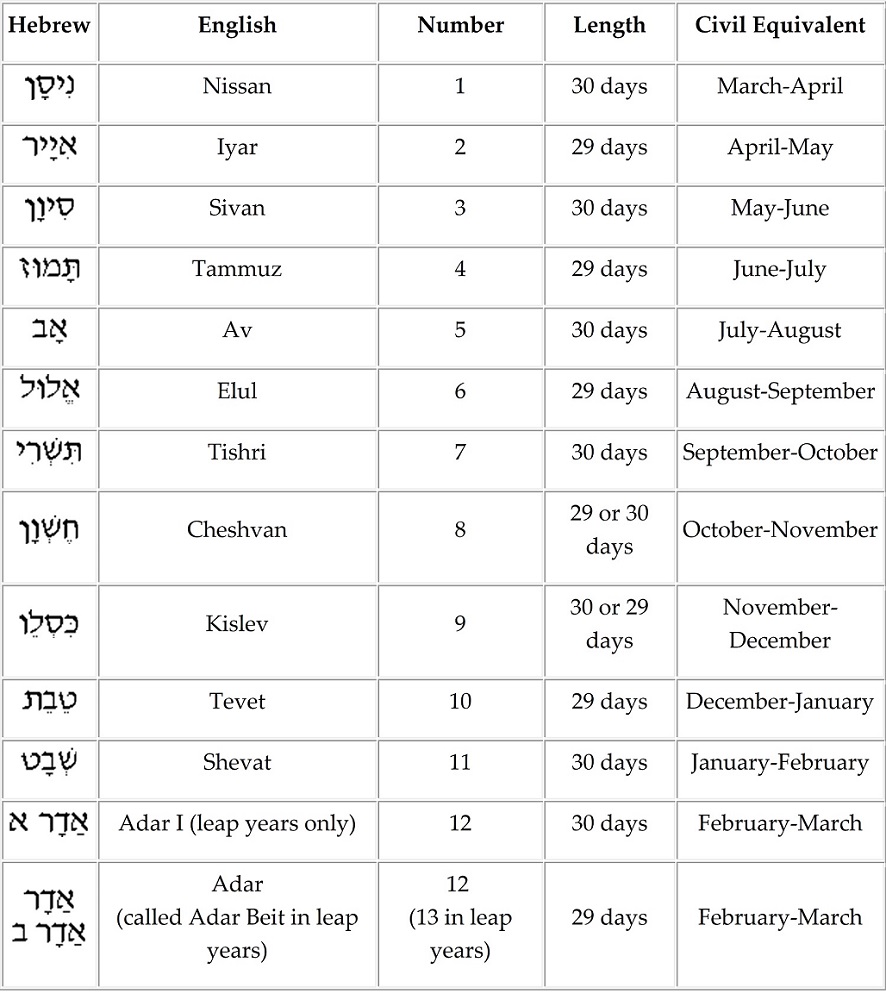
The length of Cheshvan and Kislev are determined by complex calculations involving the time of day of the full moon of the following year's Tishri and the day of the week that Tishri would occur in the next year.
Notice that the number of days between Nissan and Tishri is always the same. Because of this, the time from the first major festival (Passover in Nissan) to the last major festival (Sukkot in Tishri) is invariably the same.
Days of the Jewish week
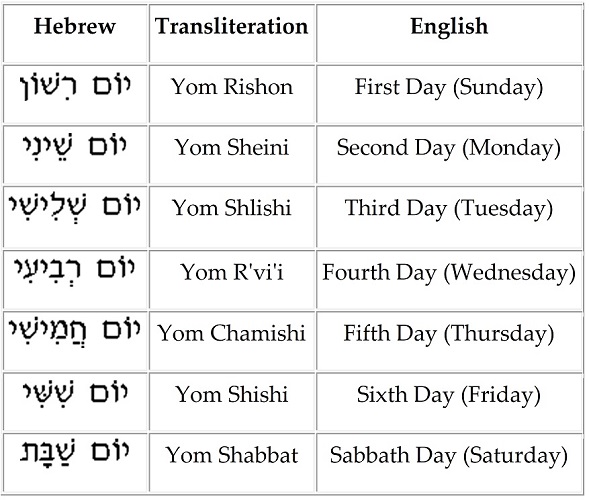
Except for Shabbat, the name of the seventh day of the week, the Jewish calendar does not have names for the days of the week. The days of the week are simply known as the first day, second day, the third day, and so on. Sometimes, they are referred to more fully as First Day of the Sabbath. Below is a list of those who are concerned. 48
Religious Clothing
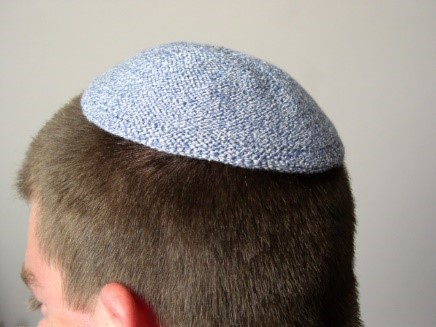
Kippah is a slightly rounded brimless skullcap worn by many Jews, while praying, eating, reciting blessings, or studying Jewish religious texts, and at all times by some Jewish men. In Orthodox communities, only men wear Kippot; in non-Orthodox communities, some women also wear it. Kippot range in size from a small round beanie that covers only the back of the head to a large, snug cap that covers the whole crown.
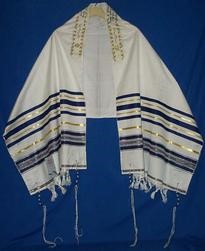
Tzitzit are special knotted "fringes" or "tassels" found on the four corners of the Tallit or prayer shawl. The Tallit is worn by Jewish men and some Jewish women during the prayer service. Customs vary regarding when a Jew begins wearing a Tallit. In the Sephardi community, boys wear a Tallit from Bar Mitzvah age. 49 In some Ashkenazi communities, it is customary to wear one only after marriage. A Tallit Katan (small Tallit) is a fringed garment worn under the clothing throughout the daytime. In some Orthodox circles, the fringes are allowed to hang freely outside the clothing.
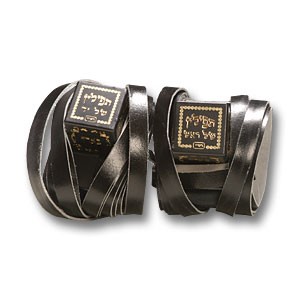
Tefillin, known in English as phylacteries (from the Greek word, meaning safeguard or amulet), are two square leather boxes containing biblical verses, attached to the forehead and wound around the left arm by leather straps. They are worn during weekday morning prayer by observant Jewish men and some Jewish women. 50
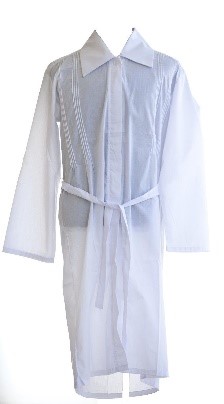
Kittel, a white knee-length over-garment, is worn by prayer leaders and some observant traditional Jews on the High Holidays. It is traditional for the head of the household to wear a Kittel at the Passover Seder in some communities, and some grooms wear one under the wedding canopy. Jewish males are buried in a tallit and sometimes also in a kittel which are part of the tach Ri Chim (burial garments).
Jewish Sects
Jewish religious movements, sometimes called "denominations" or "branches", include different groups which have sprung up among Jews from ancient times. Today, the main division is between the Orthodox, Reform, and Conservative lines, with several smaller movements alongside them. This threefold denominational structure is primarily present in the United States, while in Israel the fault lines are between the religious Orthodox and the non-spiritual.
The movements differ in their views on various issues. These issues include the level of observance, the methodology for interpreting and understanding Jewish law, biblical authorship, textual criticism, and the nature or role of the messiah (or Messianic age). Across these movements, there are marked differences in liturgy, especially in the language in which services are conducted, with the more traditional movements emphasising Hebrew. The sharp theological division occurs between Orthodox and non-Orthodox Jews who adhere to other denominations, such that the non-Orthodox movements are sometimes referred to collectively as the "liberal denominations" or "progressive streams."
The Jewish denominations themselves reject characterization as sects. They claim that sects are traditionally defined as religious subgroups that have separate away from the main body, and this separation usually becomes irreparable over time. Within Judaism, individuals and families often switch affiliation, and individuals are free to marry one another, although the major denominations disagree on the subject that who is called a Jew. It is not unusual for clergy and Jewish educators trained in one of the liberal denominations to serve in another and left with no choice; many small Jewish communities combine elements of several movements to achieve a viable level of membership.
Relationships between Jewish religious movements are varied; they are sometimes marked by interdenominational cooperation outside of the realm of Halakha (Jewish law), and sometimes not. Some of the movements sometimes cooperate by uniting with one another in community federations and campus organisations such as the Hillel Foundation. Jewish religious denominations are distinct from but often linked to, Jewish ethnic divisions and Jewish political movements.
Before the destruction of the Second Temple in 70 CE, Jews of the Roman province of Judaea were divided into several movements, sometimes warring among themselves: Sadducees, Pharisees, Essenes, and Zealots. Many historical sources such as Flavius Josephus, the (Christian) New Testament and the recovered fragments of the Dead Sea Scrolls, attest to the divisions among Jews at this time. Rabbinical writings from later periods, including the Talmud, further attest these old schisms.
The main internal struggles during this era were the Pharisees and the Sadducees, as well as the Essenes and Zealots. Their brief introduction is as follows:
The leaven of the pharisees and sadducees
The Pharisees were at various times a political party, a social movement, and a school of thought in the Holy Land 51 during the period of Second Temple Judaism. After the destruction of the Second Temple in 70 CE, Pharisaic beliefs became the foundational, liturgical and ritualistic basis of Rabbinic Judaism.
The Sadducees, who were more ancient than the Pharisees, but less numerous. In the Talmud we are told, that they derived their name from Sadoc; they received only the Pentateuch and rejected the traditions of the Pharisees. They also denied the existence of angels, the resurrection of the physical structure, and the immortality of the individual. They declared that the person had no separate existence, simply disappeared, or strike down into nothing, at the breakup of its union with the physical structure.
Conflicts between Pharisees and Sadducees took place in the context of much broader and longstanding social and religious differences among Jews, made worse by the Roman subjugation. Another conflict was cultural, between those who favoured Hellenization 52 (the Sadducees) and those who resisted it (the Pharisees). A third was juridical-religious, between those who emphasized the importance of the Second Temple with its rites and services, and those who emphasized the importance of other Mosaic Laws. The fourth point of conflict, specifically religious, involved different interpretations of the Torah and how to apply it to current Jewish life, with the Sadducees recognizing only the Written Torah (with Greek philosophy) and rejecting doctrines such as the Oral Torah, the Prophets, the Writings, and the resurrection of the dead.
The total Pharisee population before the downfall of the Second Temple was around 6,000. Josephus claimed that Pharisees received the full support and goodwill of the common people, apparently in contrast to the more elite Sadducees, who were the upper class. The Pharisees claimed Mosaic authority for their interpretation of Jewish Laws, while the Sadducees represented the authority of the priestly privileges and prerogatives established since the days of Solomon, when Zadok, their ancestor, officiated as the High Priest. The idiomatic expression "common people" in Josephus' writings suggest that most Jews were "just Jewish people", differentiating them from the main liturgical groups.
Outside of the Jewish history and literature, the Pharisees have been made notable by references in the New Testament to conflict with John the Baptist and with Jesus . There are also several mentions in the New Testament to the Apostle Paul being a Pharisee.
As it is found in Acts:
٥ عَالِمِينَ بِي مِنَ ٱلْأَوَّلِ، إِنْ أَرَادُوا أَنْ يَشْهَدُوا، أَنِّي حَسَبَ مَذْهَبِ عِبَادَتِنَا ٱلْأَضْيَقِ عِشْتُ فَرِّيسِيًّا. 53
They have always known if they are willing to testify, that from the very first I have lived as a member of the strictest party of our religion, the Pharisees.
The relationship between early Christianity and Pharisees was not always hostile, such as Gamaliel is often cited as a Pharisaic leader who was sympathetic to Christians. 54
Essenes
The Essenes, who were nearly of the same date with the Pharisees, and were distinguished by an austere sanctity, by having all things in common, by abstaining from marriage, and by living a monastic and contemplative life. They did not worship at the synagogue, but in their homes, and have thus been considered schismatic, as good as the Samaritans.
The Essenes have gained fame in modern times as a consequence of the discovery of an extended group of religious documents, the Dead Sea Scrolls, which are ordinarily considered to be the Essenes' library—although not conclusive. These documents preserve multiple copies of parts of the Hebrew Bible untouched from possibly as early as 300 BCE until their discovery in 1946. Some scholars dispute the opinion that the Essenes wrote the Dead Sea Scrolls. 55 Rachel Elior questions even the existence of the Essenes. 56
Zealots
The term "zealot", in Hebrew Kanai, means the one who is zealous on behalf of God. The term derives from Greek zealots, which means "emulator, zealous admirer or follower."57
According to Encyclopedia of Britannica, it is a Jewish sect noted for its determined opposition to pagan Rome and the polytheism it professed. The Zealots were an aggressive political party whose concern for the national and religious life of the Jewish people led them to despise even Jews who sought peace and conciliation with the Roman authorities. A census of Galilee ordered by Rome in A.D. 6 spurred the Zealots to rally the populace to noncompliance because the agreement was an implicit acknowledgement by Jews of the right of pagans to rule their nation.
Extremists among the Zealots turned to terrorism and assassination and became known as Sicarii (Greek sikarioi, “dagger men”). They frequented public places with hidden daggers to strike down persons friendly to Rome. In the first revolt against Rome (AD 66–70) the Zealots played a leading role, and at Masada, in 73 they committed suicide rather than surrender the fortress, but they were still a force to be reckoned with in the first part of the following century. 58
In the Talmud, the Zealots are the non-religious (not following the religious leaders). They are also called the Biryonim that stands for "boorish", "wild", or "ruffians". They are condemned for their aggression and unwillingness to compromise for saving the survivors of the besieged Jerusalem, and their blind militarism against the Rabbis' opinion to seek treaties for peace. However, according to one body of tradition, the Rabbis initially supported the revolt up until the Zealots initiated a civil war, at which point all hope of resisting the Romans was deemed impossible. 59
The later famous sects of Judaism are as follows:
Rabbinic Judaism
The Rabbinates or Talmudists are those who add to the written law, all the traditions of the Talmud. They conceive that the actual sense of their scriptures is only to be found in their oral traditions. The commentaries of their celebrated doctors; and, in fact, they hold the Talmud, or at least the Mishna in equal veneration, and of equal authority, with the written law, or books of the Old Testament. They hold the ancient Pharisees in high estimation; and tell that they were not a sect, but the whole mass of Jews, from which schism had separated and branched out the other sects. They insist that their character is not fairly represented in the New Testament, and refer to Josephus for a just account of them. They appear to inherit their self-righteousness, and with them to plead their own virtues, or at least those of their ancestors, in their addresses to God. 60
Karaite Judaism
The Karaites ("Followers of the Bible") were a Jewish sect, professing, in its religious observances and opinions, to follow the Bible to the exclusion of rabbinical traditions and laws. However, Karaism, in fact, adopted a large part of rabbinical Judaism, either outright or with more or less modification, while at the same time it borrowed from earlier or later Jewish sects—Sadducees, Essenes, 'Isawites, Yudghanites, etc.. —as well as from the Muslims. The founder of the sect being Anan, his followers were at first called Ananites, but as the doctrines of the sect were more fully developed, and it gradually emancipated itself from Ananism, they took the name of "Karaites," a term first used by Benjamin al-Nahawendi. 61
In the early 20th century, Karaite communities remained in Egypt, Turkey, the Crimea, and Ukraine, what is now Poland, Lithuania, and Israel. Today, there are about 50,000 Karaite Jews in the world, most of whom dwell in Israel, although other communities exist in the United States, France, Switzerland, and Turkey, as well as individual Karaites in other states. Traditionally, Rabbinic Judaism has regarded the Karaites as Jewish, merely with an incorrect philosophical understanding of the Torah. Likewise, Karaite Judaism considers the Rabbinates as Jewish but heretics.
Synagogues and religious buildings
The word ‘synagogue’, as we have already seen, comes from the Greek. The Hebrew term is Bet Knesset, ‘house of assembly’. Many Ashkenazi Jews refer to it by the Yiddish term shool, meaning a school. This may reflect the fact that the synagogue sometimes doubled as a house of study, although that is strictly a separate institution, called in Hebrew Bet Ha-Midrash. The word kloyz (related to ‘cloister’ in English) was formerly used in central and eastern Europe for a synagogue, or for a house of study that doubled as a synagogue. Some Jewish communities use the term ‘temple’ in preference to ‘synagogue’. Synagogues come in all shapes and sizes, and there are no particular architectural requirements. They tend to reflect local architectural trends, sometimes flirting with church or mosque architecture and sometimes deliberately avoiding it. In the medieval period, they were often small and discreetly located, so as not to attract attention to themselves. 62
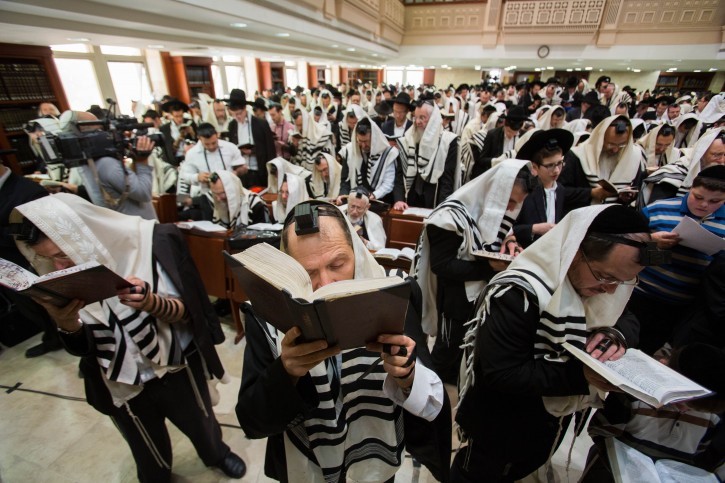
Some traditional features of a synagogue are:
- The ark where the Torah scrolls are kept (the ark is often closed with an ornate curtain (parochet) outside or inside the ark doors.
- The elevated reader's platform, where the Torah is read. (And services are conducted in Sephardi synagogues)
- The eternal light, a continually lit lamp or lantern used as a reminder of the constantly lit menorah of the Temple in Jerusalem
- The pulpit, or amud, a lectern facing the Ark where the hazzan 63 or prayer leader stands while praying.
- In addition to synagogues, other buildings of significance in Judaism include yeshivas, or institutions of Jewish learning, and mikvahs, which are ritual baths.
Demography
The total figure of Jews worldwide is hard to measure because the definition of "Who is a Jew?" is problematic; not all Jews identify themselves as Jewish, and some who identify as Jewish are not viewed so by other Jews. Granting to the Jewish Year Book (1901), the global Jewish population in 1900 was about 11 million. In 2002, according to the Jewish Population Survey, there were 13.3 million Jews around the globe. The Jewish Year Calendar cites 14.6 million. According to the report, since the end of the war in 1945, the number of Jews in the world consistently increased, reaching some 14.2 million in early 2015. The past decade, between the years 2005-2015, saw the biggest jump since the end of the war, with an over 8 percent increase.
According to the report of the Jewish People Policy Institute (JPPI) the number of Jews worldwide is close to returning to what it was before World War II - nearly 16 million and its division is as follows:
- Israel – 6,103,200
- United States – 5,700,000
- France – 475,000
- Canada - 385,300
- Latin America – 383,500
- Britain – 290,000
- Russia – 186,000
- Germany – 118,000
- Australia – 112,500
- Africa – 74,700
- South Africa – 70,000
- Ukraine – 63,000
- Hungary – 47,900
- Iran – 20,000
- Asia – 19,700
- Romania – 9,400
- New Zealand – 7,600
- Morocco – 2,400 approximately.
- 1 The Bible, Deuteronomy 6: 4
- 2 But history proofs that Jews have been the main political and social figure who create restlessness in the World’s peace for several hundred years and have been involved in conspiracies of peace’s destruction which is against the true teachings of Judaism. It is something else that several amendments have been made in Jewish teachings like Christianity.
- 3 John Clark Archer (1958), Judaism, Faiths Men Live By, The Ronald Press Company, New York, USA, Pg. 344.
- 4 Della Pergola, Sergio (2015), World Jewish Population, 2015 (Report), Berman Jewish Data Bank: Retrieved 04-02-2017.
- 5 The Bronze Age is a period characterized by the use of bronze, proto-writing, and other early features of urban civilization. The Bronze Age is the second principal period of the three-age Stone-Bronze-Iron system, as proposed in modern times by Christian Jurgensen Thomsen, for classifying and studying ancient societies. An ancient civilization is defined to be in the Bronze Age either by smelting its own copper and alloying with tin, arsenic, or other metals, or by trading for bronze from production areas elsewhere. Copper-tin ores are rare, as reflected in the fact that there were no tin bronzes in Western Asia before trading in bronze began in the third millennium BC. Worldwide, the Bronze Age generally followed the Neolithic period, with the Chalcolithic serving as a transition.
- 6 Religion: Three Religions, One God PBS: http://www.pbs.org/wgbh/globalconnections/mideast/themes/religion/: Retrieved: 04-02-2017
- 7 Stephen M. Wylen (2000), Settings of Silver: An Introduction to Judaism, Paulist Press, USA, Pg. 59.
- 8 Israel Abrahams (1921), Judaism, Constable & Company Ltd., London, U.K, Pg. 1-2.
- 9 Society for Humanistic Judaism", Shj.org., Retrieved: 04-02-2017
- 10 Encyclopedia Britannica (Online Version), https://www.britannica.com/topic/Judaism: Retrieved: 03-04-17
- 11 G. T. Bettany (1893), A Sketch of the History of Judaism and Christianity in Light of Modern Research and Criticism, Ward, Lock, Bowden & Co, London, U.K, Pg. 14.
- 12 Robert S. Ellwood & Gregory D. Alles (1998), The Encyclopedia of World Religions, Facts on File Inc., New York, USA, Pg. 2.
- 13 Milman (1909), History of the Jews, J. M. Dent & Sons, Ltd, London, U.K, Vol-1, Pg. 62.
- 14 Lavinia Cohn-Sherbok (2006), A Guide to Judaism, The Subject Center for Philosophical and Religious Studies, Yorkshire, U.K, Pg. 1.
- 15 Israel Abrahams (1921), Judaism, Constable & Company Ltd., London, U.K, Pg. 23-26.
- 16 Kaufmann Kohler (2010), Jewish Theology, The Project Gutenberg, Utah, USA, Pg. 21.
- 17 The Bible, Psalms 33:15
- 18 The Thirteen Principles of Jewish Faith: http://www.chabad.org/library/article_cdo/aid/332555/jewish/Maimonides-13-Principles-of-Faith.htm: Retrieved: 07-02-2017.
- 19 Lavinia Cohn-Sherbok (2006), A Guide to Judaism, The Subject Center for Philosophical and Religious Studies, Yorkshire, U.K, Pg. 3.
- 20 David Philipson (August 9, 1862 – June 29, 1949) was an American Reform rabbi, orator, and author. The son of German-Jewish immigrants, he was a member of the first graduating class of the Hebrew Union College in Cincinnati. As an adult, he was one of the leaders of American Reform Judaism and a philanthropic leader in his adopted hometown of Cincinnati. In addition to English, he spoke Hebrew, German, Arabic, Aramaic, and Amharic. In the early 20th Century, Philipson was most famous for his anti-Zionist beliefs. Believing that "...no man can be a member of two Nationalities", Philipson used his power to counter what he saw as the exclusionary and zealous acts of Zionists. He used HUC's journal of Reform Judaism, The American Israelite, to further his view that Judaism was a religion exclusively, and thus stateless. Shortly after the First Zionist Congress in Basel, the Union of American Hebrew Congregations held its first convention. With Philipson at their head, they issued a statement in 1897 stating that "America is our Zion." ) https://en.wikipedia.org/wiki/David_Philipson#Work_within_the_Jewish_community: Retrieved: 07-02-2017(
- 21 Kosior, Wojciech (2015), Some Remarks on the Self-Images of the Modern Judaism, Textual Analysis, Filozofia kultury, Krakow, Poland, Pg. 91–106.
- 22 R. W. Dale (1870), The Ten Commandments, Hodder and Stoughton, New York, USA, Pg. 5-9.
- 23 The Bible, Exodus 20: 2-16
- 24 The Bible, Deuteronomy 5:5-21 (with alternative language)
- 25 Barton (2001), "Introduction to the Old Testament", in Muddiman, John; Barton, John, Bible Commentary, Oxford University Press, Oxford, U.K.
- 26 Robert C. Dentan (1954), The Apocrypha, Bridge of the Testaments, A Reader’s Guide to the Apocryphal Books of the Old Testament (PDF), Orthodox Anglican. Two of the hymns used in the American Prayer Book office of Morning Prayer, the Benedictus es and Benedicite, are taken from the Apocrypha. One of the offertory sentences in Holy Communion comes from an apocryphal book (Tob. 4: 8–9). Lessons from the Apocrypha are regularly appointed to be read in the daily, Sunday, and special services of Morning and Evening Prayer. There are altogether 111 such lessons in the latest revised American Prayer Book Lectionary )Books used are: II Esdras, Tobit, Wisdom, Ecclesiasticus, Baruch, Three Holy Children, and I Maccabees.(
- 27 Wikipedia the Free Encyclopedia: https://en.wikipedia.org/wiki/Old_Testament: Retrieved: 06-02-2017
- 28 New World Encuclopedia: http://www.newworldencyclopedia.org/entry/Talmud: Retrieved: 06-04-17
- 29 Maurice H. Harris (1904), A Thousand Years of Jewish History, Published by the Author, New York, USA, Pg. 190.
- 30 Oliver Leaman (2011), Judaism: An Introduction, I. B. Tauris & Co Ltd, London, U.K, Pg. 105-111.
- 31 G. T. Bettany (1893), A Sketch of the History of Judaism and Christianity in Light of Modern Research and Criticism, Ward, Lock, Bowden & Co, London, U.K, Pg.25-31.
- 32 William Rosenau (1903), Jewish Ceremonial Institutions and Customs, The Frieden Wald Company Publishers, Maryland, USA, Pg. 67-68.
- 33 The Bible, Deuteronomy 16: 16
- 34 Jewish Encyclopedia 1906 (Online Version): http://www.jewishencyclopedia.com/articles/12149-pilgrimage: Retrieved: 06-04-17
- 35 The Bible, Exodus 13: 7
- 36 Claude G. Montefiore (1903), Liberal Judaism, Macmillan and Co. Ltd, London, U.K, Pg. 155.
- 37 Oliver Leaman (2011), Judaism: An Introduction, I. B. Tauris & Co. Ltd., London, U.K, Pg. 127.
- 38 The Bible, Exodus 34: 22
- 39 Claude G. Montefiore (1903), Liberal Judaism, Macmillan and Co. Ltd., London, U.K, Pg. 156.
- 40 Encyclopedia Britannica (Online Version), Sukkoth, https://www.britannica.com/topic/Sukkoth-Judaism: Retrieved: 06-04-17
- 41 Israel Abrahams (1921), Judaism, Constable & Company Ltd., London, U.K, Pg. 61.
- 42 The Unedited full text of the Jewish Encyclopedia 1906 (Online Version): http://www.jewishencyclopedia.com/articles/11499-new-year: Retrieved: 06-04-17
- 43 G. T. Bettany (1893), A Sketch of the History of Judaism and Christianity in Light of Modern Research and Criticism, Ward, Lock, Bowden & Co, London, U.K, Pg. 31-32.
- 44 A. Kingsley Glover (1900), Jewish laws and Customs, W. A. Hammonds Publisher, Minnesota, USA, Pg. 108-114.
- 45 Nicholas De Lange (2000), An Introduction to Judaism, Cambridge University Press, Cambridge, U.K, Pg. 107.
- 46 "Anno Domini", Merriam Webster Online Dictionary, Merriam-Webster: 2003, Etymology: Medieval Latin, in the year of the Lord: Retrieved: 10-02-2017
- 47 According to Jewish scholars this concept of different starting points for a year is not strange. They give it resemblance from The American "new year" which starts in January, but the new "school year" starts in September and many businesses which have "fiscal years" that start at various times of the year. They claim that similar to them the Jewish calendar has different starting points for different purposes.
- 48 Judaism 101: http://www.jewfaq.org/calendar.htm: Retrieved: 10-02-2017
- 49 Bar Mitzvah and Bat Mitzvah are Jewish coming of age rituals. Bar is a Jewish Babylonian Aramaic word literally meaning "son", while ‘Bat’ means "daughter" in Hebrew, and ‘Mitzvah’ means "commandment" or "law" (plural: mitzvot). Thus bar mitzvah and bat mitzvah literally translate to "son of commandment" and "daughter of commandment". However, in rabbinical usage, the word bar means "under the category of" or "subject to". Bar mitzvah therefore translates to "an )agent( who is subject to the law". Although the term is commonly used to refer to the ritual itself, in fact the phrase originally refers to the person. According to Jewish law, when Jewish boys become 13 years old, they become accountable for their actions and become a bar mitzvah. A girl becomes a bat mitzvah at the age of 12 according to Orthodox and Conservative Jews, and at the age of 13 according to Reform Jews. ) http://www.reformjudaism.org/origins-barbat-mitzvah: Retrieved: 10-02-2017(
- 50 Nathan Ausubel (1964), "Tefillin", "The Book of Jewish Knowledge", Crown Publishers, New York, USA, Pg. 458.
- 51 The Holy Land (Arabic: الأرض المقدسة) is an area roughly located between the Jordan River and the Mediterranean Sea that also includes the Eastern Bank of the Jordan River. Traditionally, it is synonymous with both the biblical Land of Israel and historical Palestine. The term usually refers to a territory roughly corresponding to the modern State of Israel, the Palestinian territories, western Jordan, and parts of southern Lebanon and southwestern Syria. It is considered holy by Jews, Christians, and Muslims. Part of the significance of the land stems from the religious significance of Jerusalem, the holiest city to Judaism, the historical region of Jesus' ministry, and the site of the Isra and Mi'raj event in Islam. It is captured by Jews now a days and they are doing ruthless butcheries of those innocent Muslims who have been living there for centuries and are being assassinated by the Jewish Massacres and Holocausts.
- 52 Hellenization (American English) or Hellenisation (British) is the historical spread of ancient Greek culture and, to a lesser extent, language, over foreign people conquered by Greece or brought into its sphere of influence, particularly during the Hellenistic period following the campaigns of Alexander the Great (king of Macedon, r. 336–323 BC). The result of Hellenisation was that elements of Greek origin combined in various forms and degrees with local elements; these Greek influences spread from the Mediterranean basin as far east as modern-day Pakistan. In modern times, Hellenisation has been associated with the adoption of modern Greek culture and the ethnic and cultural homogenization of Greece. )Katerina, Zacharia (2008), Hellenisms: Culture, Identity, and Ethnicity from Antiquity to Modernity, Ashgate Publishing Ltd., Surrey, U.K; Thanos M. Veremis (2002), Greece: The Modern Sequel: From 1831 to the Present. New York University Press, New York, USA.(
- 53 The Bible, Acts 26: 5
- 54 The Bible, Acts 5: 34-39
- 55 Hillel Newman (2006), Proximity to Power and Jewish Sectarian Groups of the Ancient Period, Brill, Leiden, Netherland.
- 56 Time: http://content.time.com/time/world/article/0, 8599, 1885421, 00.html: Retrieved: 10-02-2017
- 57 Online Etymology Dictionary: http://www.etymonline.com/index.php?search=zealot&searchmode=none: Retrieved: 10-02-2017
- 58 Encyclopedia bBritannica (Online Version) https://www.britannica.com/topic/Zealot: Retrieved: 12-04-2017
- 59 Neusner, Jacob (1962), A Life of Rabban Yohanan Ben Zakkai: Ca. 1-80 C.E., E.J. Brill, Netherlands, Vol. 6.
- 60 Robert Adam (1818), The Religious World Displayed; or A View of the Four Grand Systems of Religion, Pub: Moses Thomas, Philadelphia, USA, Vol. 1, Pg. 82-88.
- 61 Jewish Encyclopedia (Online Version): http://www.jewishencyclopedia.com/articles/9211-karaites-and-karaism: Retrieved: 12-04-17
- 62 Nicholas De Lange (2000), An Introduction to Judaism, Cambridge University Press, Cambridge, U.K, Pg. 125.
- 63 A hazzan or chazzan is a Jewish musician, or presenter, trained in the vocal arts who helps to lead the congregation in songful prayer. )Geoffrey Wigoder; Fred Skolnik; Shmuel Himelstein, eds. (2002), "Cantor and cantorial music", The New Encyclopedia of Judaism, New York University Press, New York, USA.( In English, this prayer-leader is often referred to as cantor, a term also used in Christianity.
Hamdani, Mufti Shah Rafi Uddin & Khan, Dr. (Mufti) Imran. (2018), Judaism – History, Beliefs, Scriptures and Key Traditions, Encyclopedia of Muhammad ﷺ, Seerat Research Center, Karachi, Pakistan, Vol. 1, Pg. 385-415.
https://muhammadencyclopedia.com/article/en/judaism-history-beliefs-scriptures-and-key-traditions